A Unified Front for Local Health
Public Health Centre II units in Uganda form the first line of medical defense at the parish level, handling outpatient care, minor ailments, and critical immunization drives. However, they frequently face resource constraints, including stock-outs of essential medicines and diagnostic equipment.
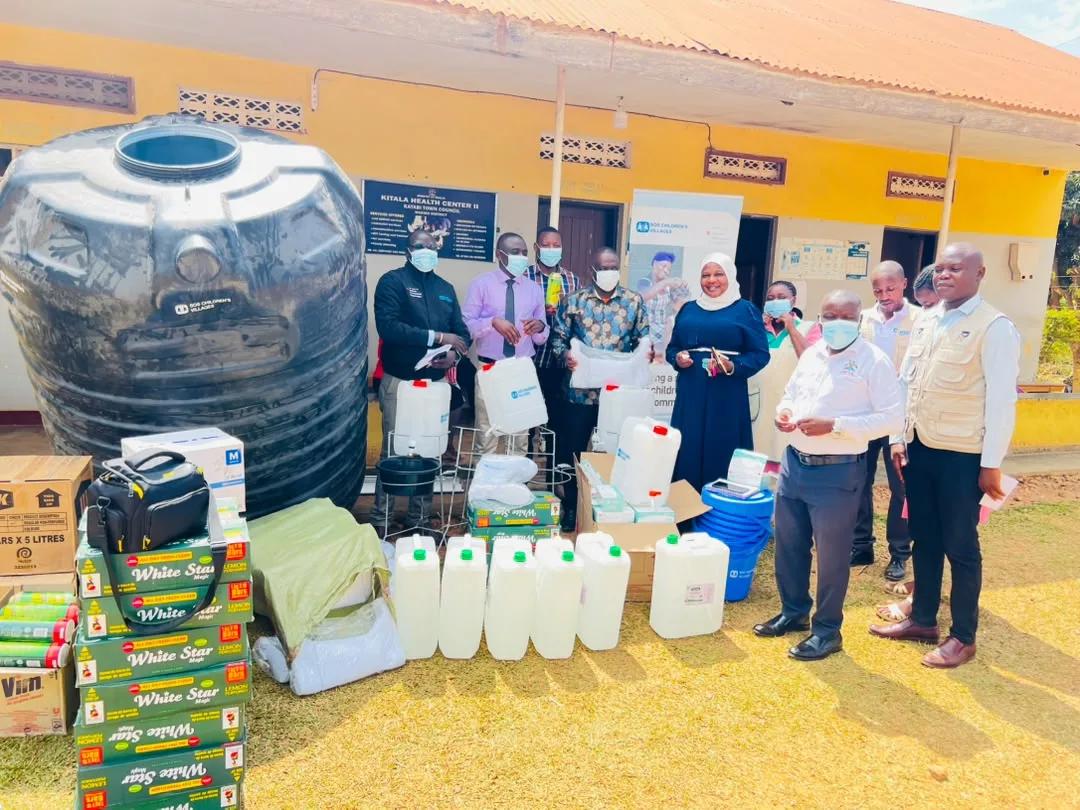
Recognizing these systemic challenges, the SOS Children’s Village Health Centre II—a private-not-for-profit (PNFP) facility located within the same administrative tier—has actively stepped in to bridge the gap. By sharing vital medical supplies, maternal health resources, and corporate in-kind donations, the organization ensures that neighboring public units like Kitala HC II remain equipped to handle the daily influx of patients.
Impact on Maternal and Child Health
The core of the partnership focuses heavily on women and children. The joint efforts ensure that:
• Immunization Coverage: Remote villages receive routine child vaccines through harmonized outreach schedules.
• Maternal Referrals: Complicated prenatal and postnatal cases are efficiently triaged and referred between the two centers to prevent maternal mortality.
• Health Education: Families enrolled in the SOS Family Strengthening Programme receive preventive health education, lowering the incidence of preventable diseases in the Kitala catchment area.
A Model for Private-Public Partnerships (PPP)
Local leaders have lauded the initiative as a textbook example of how non-governmental organizations (NGOs) can meaningfully uplift government systems rather than working in silos. By reinforcing Kitala Health Centre II, SOS Children’s Villages is effectively multiplying its impact, ensuring that healthcare extends far beyond the children under its direct institutional care and reaches the wider community.
As resource demands grow with Wakiso’s expanding population, both facilities remain committed to deepening their ties, proving that structured local solidarity is key to achieving universal healthcare access in Uganda.
Public Health Centre II units in Uganda form the first line of medical defense at the parish level, handling outpatient care, minor ailments, and critical immunization drives. However, they frequently face resource constraints, including stock-outs of essential medicines and diagnostic equipment.
Recognizing these systemic challenges, the SOS Children’s Village Health Centre II—a private-not-for-profit (PNFP) facility located within the same administrative tier—has actively stepped in to bridge the gap. By sharing vital medical supplies, maternal health resources, and corporate in-kind donations, the organization ensures that neighboring public units like Kitala HC II remain equipped to handle the daily influx of patients.
Impact on Maternal and Child Health
The core of the partnership focuses heavily on women and children. The joint efforts ensure that:
• Immunization Coverage: Remote villages receive routine child vaccines through harmonized outreach schedules.
• Maternal Referrals: Complicated prenatal and postnatal cases are efficiently triaged and referred between the two centers to prevent maternal mortality.
• Health Education: Families enrolled in the SOS Family Strengthening Programme receive preventive health education, lowering the incidence of preventable diseases in the Kitala catchment area.
A Model for Private-Public Partnerships (PPP)
Local leaders have lauded the initiative as a textbook example of how non-governmental organizations (NGOs) can meaningfully uplift government systems rather than working in silos. By reinforcing Kitala Health Centre II, SOS Children’s Villages is effectively multiplying its impact, ensuring that healthcare extends far beyond the children under its direct institutional care and reaches the wider community.
As resource demands grow with Wakiso’s expanding population, both facilities remain committed to deepening their ties, proving that structured local solidarity is key to achieving universal healthcare access in Uganda.